
Should You Push Your Bed Against the Wall in A Small Bedroom?
Bed Against the Wall: The Small-Bedroom Trick That Actually Works
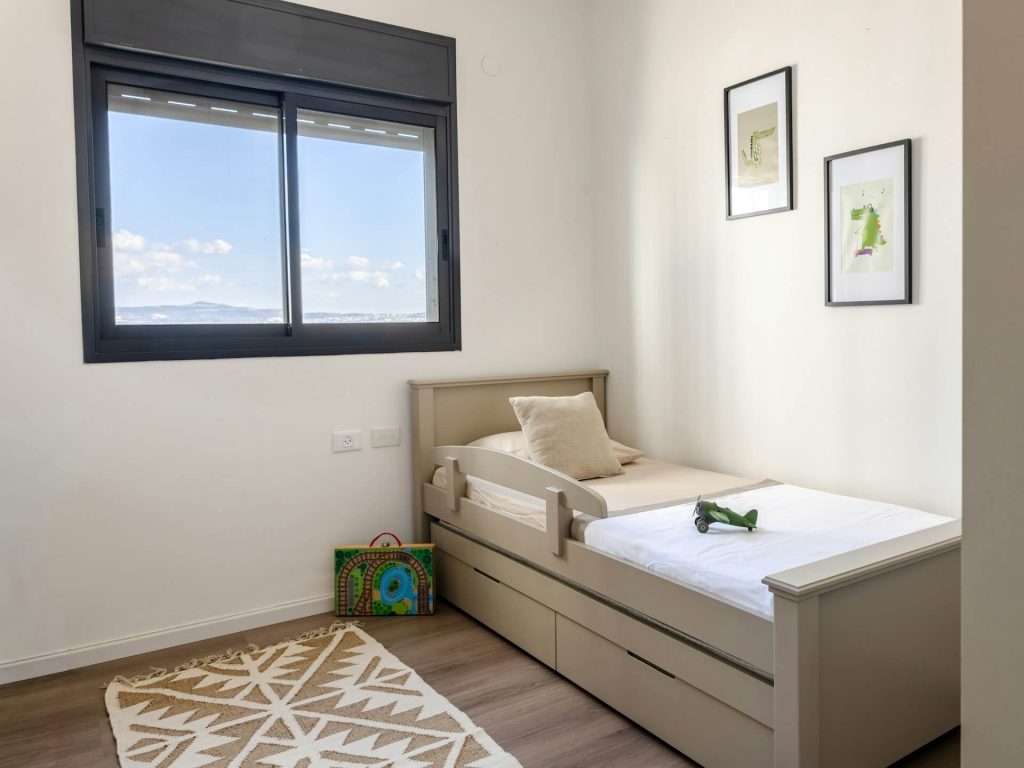
It’s one of the first things every small-bedroom guide tells you to do: push your bed against the wall. It sounds almost too simple to be real advice — but the truth is, it’s simple because it works. Still, it’s not automatically the right call for every room, and doing it badly can leave you with a bed that’s harder to make, harder to get out of, and no more comfortable than before.
This guide breaks down exactly when pushing your bed against the wall helps, when it doesn’t, and how to measure your specific room so you’re deciding with real numbers instead of guesswork.
(This post is part of our Complete Small Bedroom Design Guide — start there for the full room-by-room framework. If you’re also deciding on a bed size, see Queen Bed in a Small Bedroom: Does It Actually Fit? and Full vs. Twin XL: Which Bed Size Is Right for a Small Room?.)
Table of Contents
The Short Answer
Yes, in most small bedrooms, pushing the bed against a wall is worth doing — it reclaims an entire strip of floor space that would otherwise be split into two unusable slivers on either side of the bed. The exception is when it blocks a window, radiator, or the room’s main walkway, or when two people share the bed and both need regular access to their own side.
Three Placement Options, Compared
Before deciding, it helps to see all your realistic options side by side — not just “against the wall” versus “not.”
| Placement | Space Reclaimed | Clearance Each Side | Best For |
| Pushed against the wall (one long side touching) | Highest — frees an entire side | 0″ on wall side, full remaining width on the open side | Solo sleepers, small or narrow rooms |
| Floating (both sides open) | None — baseline layout | Split roughly evenly between both sides | Couples, larger rooms, symmetrical layouts |
| Corner-anchored (headboard + one side touching walls) | Moderate — frees one full side plus some depth | 0″ on two sides, full clearance on the remaining open side | Very tight rooms, box rooms, dorm-style layouts |
The Case for Pushing Your Bed Against the Wall
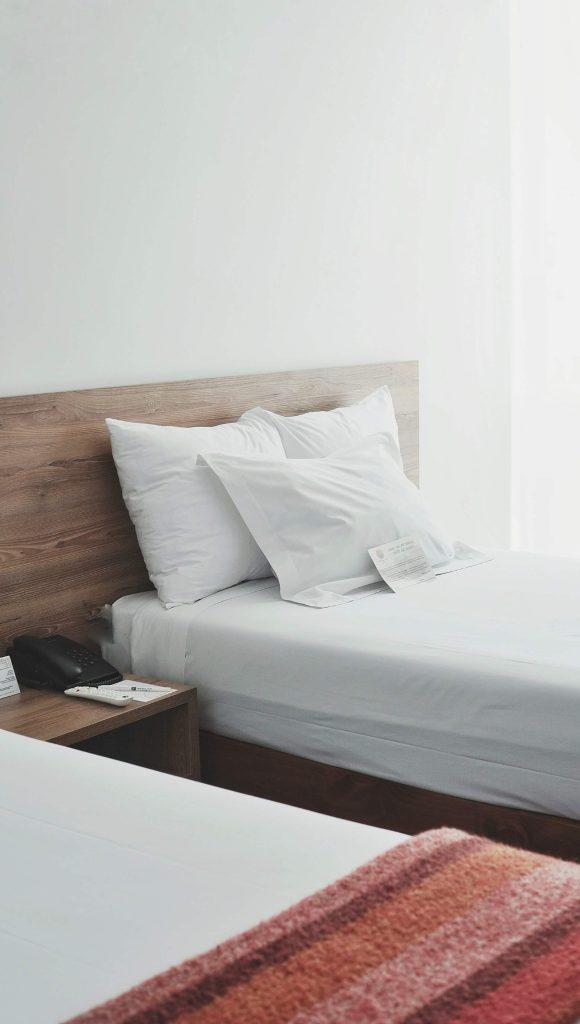
- You get one continuous walkway instead of two narrow, mostly-unusable strips of floor on either side of the bed.
- It’s easier to fit other furniture. A single open wall of floor space can fit a desk, a chair, or a dresser — something that’s nearly impossible when that space is split in half.
- The room reads as bigger. One unbroken sightline across the floor makes a small room feel more open than the same square footage divided into smaller unusable gaps.
- It’s free. Unlike most small-space fixes, this one costs nothing and takes about five minutes to test.
The Case Against It (and When to Skip This)
- Two people share the bed. If both sleepers need to get in and out regularly, pushing the bed against the wall means one person has to climb over the other — workable occasionally, frustrating every night.
- It blocks a window or vent. Sleeping directly against a cold window in winter (or blocking a radiator or return vent) creates real comfort and efficiency problems, not just aesthetic ones.
- You lose your only nightstand surface. If the wall side had your only outlet or reading light, you’ll need a plan for that — see the workarounds section below.
- Making the bed becomes awkward. Tucking sheets and fluffing pillows one-handed against a wall takes some getting used to, though most people adapt within a week or two.
Bedroom Layouts: 3 Real Room Shapes, Measured
The right call often comes down to your room’s shape, not just its square footage. Here’s how the same queen bed behaves in three common small-bedroom shapes.
| Room Shape & Size | Bed Placement | Resulting Clearance | Verdict |
| Long & narrow (9′ x 12′, door on short wall) | Against the long wall | 3-4 ft continuous walkway down the open side | Ideal — this shape is built for wall placement |
| Roughly square (10′ x 10′, window centered on one wall) | Against a side wall, clear of the window | 2.5-3 ft on the open side | Works well, keep the headboard off the window wall |
| Small & boxy (8′ x 9′, closet takes one wall) | Corner-anchored (2 walls touching) | 2-2.5 ft on the one remaining open side | Best option available — floating isn’t realistic here |
As a baseline, aim for at least 24 inches of clearance on your main walkway side — enough to comfortably walk past, open a closet door, or crouch down to make the bed. Under 18 inches starts to feel genuinely tight for daily use.
How to Measure Your Room Before You Decide
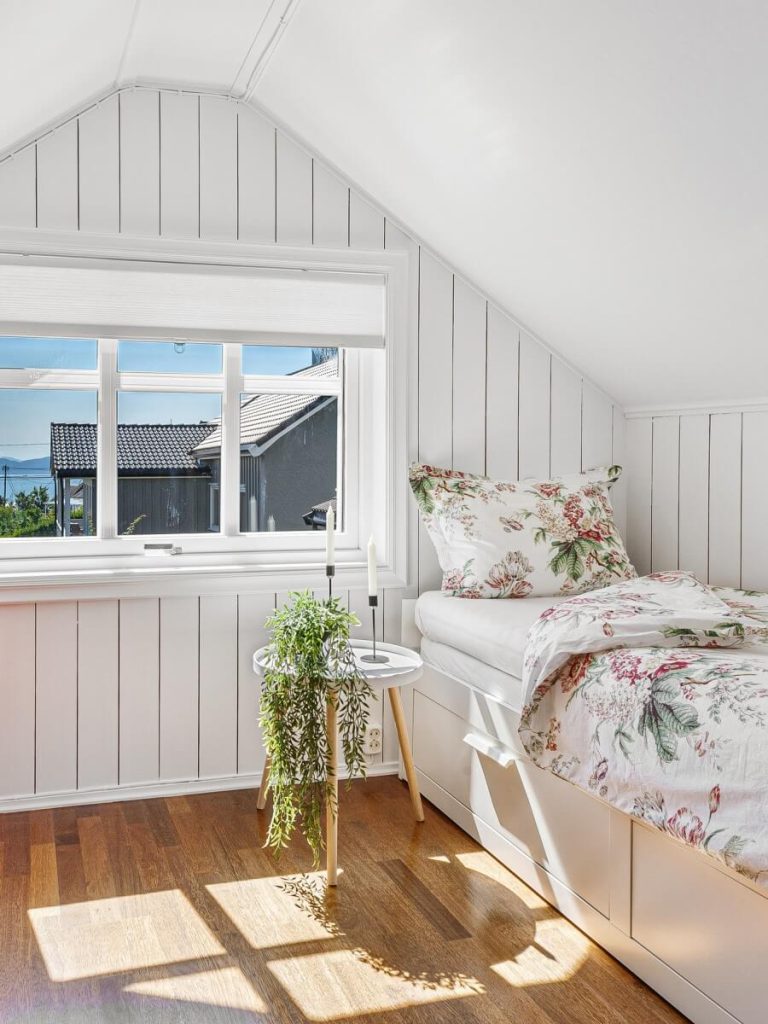
This takes about ten minutes and settles the question with numbers instead of guesswork:
- Measure the total width of the wall you’re considering (not just the space you think the bed needs).
- Measure your mattress width — not the bed frame, which is usually 1-3 inches wider on each side.
- Subtract the mattress/frame width from the wall width to see how much floor space you’d reclaim on the open side.
- Check for obstacles at bed height: outlets, window sills, baseboard heaters, or vents along that wall.
- Stand where the headboard would sit and check you’re not blocking a door swing or closet access.
If the numbers give you at least 24 inches of clearance on the open side and no obstacles at bed height, you have a workable layout.
Making It Work: 4 Practical Fixes
- Lose the nightstand, keep the surface. A slim floating shelf mounted at nightstand height gives you a spot for a lamp and a glass of water without needing floor space.
- Add a plug-in sconce if outlets are limited. This solves the “no more bedside outlet” problem without an electrician, and frees up the shelf below for other things.
- Use a headboard with a shallow profile. A slim or wall-mounted headboard won’t eat into the room the way a bulky upholstered one will, especially in a corner-anchored layout.
- Rotate which side faces the wall seasonally if you’re solo and want variety — there’s no rule that the same side has to face the wall forever.
FAQ
Traditional feng shui generally favors a bed with access on both sides and a clear view of the door, so a bed pushed fully against a wall isn’t the ideal arrangement by that framework. That said, feng shui principles are a design philosophy, not a safety or health rule — plenty of people push a bed against the wall in a small room and sleep perfectly well. If it matters to you, a corner-anchored layout (headboard and one side touching, rather than one full long side) is often treated as a reasonable middle ground.
Not on its own, but a mattress pushed directly against drywall for months can trap moisture and reduce airflow, which occasionally leads to minor mold or mildew in humid climates. A thin gap of an inch or two, or a breathable mattress protector, avoids this in most homes.
A floating shelf or a slim wall-mounted ledge on the open side solves this in almost every layout — it doesn’t need floor space and can hold a lamp, a book, and a phone just like a full nightstand would.
It can work if one partner is a much lighter sleeper who rarely needs to get up, or if the room genuinely has no other configuration. But for most couples who share a bed nightly, floating the bed (even with minimal clearance on both sides) tends to work better long-term than one person climbing over the other.
Twenty-four inches is the comfortable minimum for daily use — enough to walk past, bend down to tuck in sheets, and open a nearby door or drawer without obstruction. Eighteen inches is workable but tight; below that, the space starts to feel more like storage clearance than a real walkway.
Either works. Platform beds (no box spring, lower profile) can make the room feel slightly more open when pushed against a wall since there’s less visual bulk, but the space-saving benefit itself comes from the placement, not the frame style.
Want the full framework for planning every part of a small bedroom, not just bed placement? Check out our Complete Small Bedroom Design Guide for room diagnosis, furniture, lighting, storage, and decor strategies.